I came to InnoEnergy Masters+ from Taiwan, where I had studied Mechanical Engineering and developed what I can only describe as a quiet obsession with sustainability. I wanted to combine engineering with real environmental impact, and I kept finding myself drawn to the energy sector. InnoEnergy felt like the right place to make that happen.
Real Projects from the Start
At KTH Royal Institute of Technology in Stockholm and Universitat Politècnica de Catalunya in Barcelona, the learning was hands-on from day one. We worked on urban sustainability in Kigali, investigated bioenergy development in Punjab, and developed a firefighting robot for wildfire response in Spain. We also studied international environmental law, the Paris Agreement, and carbon credit mechanisms. Engineering and policy, side by side.
I had expected technical depth. I had not expected the breadth.
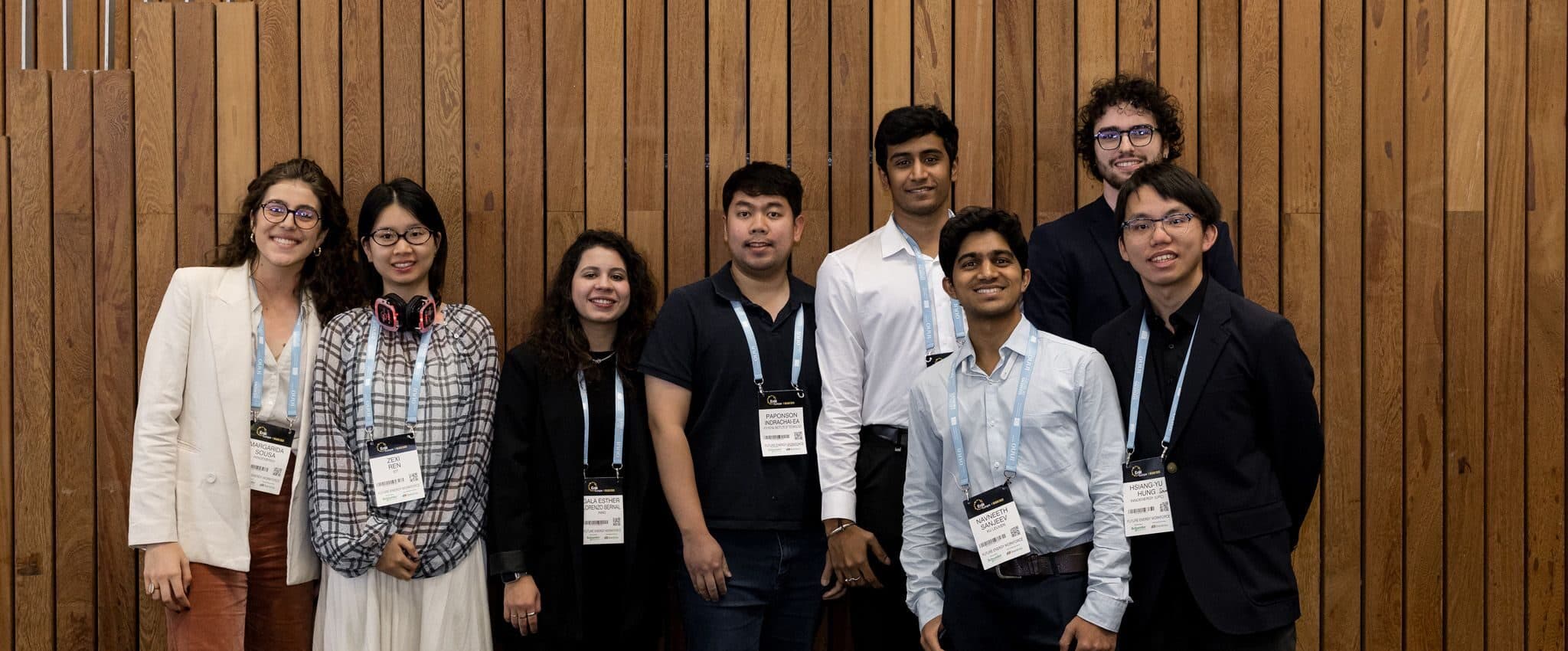
The annual Connect event was where it started. I met people from similar backgrounds and learned something that sounds simple but takes practice: how to build a professional connection and actually follow through on it. At ENLIT Europe, I had the chance to work with Siemens Energy on a real hackathon challenge alongside students from across the InnoEnergy network. That experience taught me what cross-disciplinary teamwork actually looks like when industry, academia, and young professionals are in the same room working on the same problem.
CommUnity+ gave me something else too. I went from being a participant in company visits to becoming an organiser on the CommUnity+ team. That shift, from attending to contributing, changed how I saw myself professionally.
The Esade Chaper
One of the most unexpected parts of the journey was the Innovation and Entrepreneurship track at Esade Business School.
Our team developed a second-life battery concept for heavy industry and shaped it into a real business case. It sounds straightforward on paper, but the experience of actually building something, defending assumptions, and thinking like a founder changed my mindset in ways that no course could have done alone. We then took the idea further through the Green Seed Journey, pitching to investors and refining the concept under real scrutiny.
I did not expect a Master’s in energy engineering to teach me how to think like an entrepreneur. It did.
How the Internship Happened
My first interview with reLi Energy came through a virtual career fair organised by Careers+. I applied on the back of my experience in secondary battery systems from the Esade project and the Green Seed Journey, and I got the internship.
Over six months, I worked on battery degradation modelling and how batteries participate across different energy markets. The technical depth was real, and so was the complexity. I learned that the journey from academic idea to industry application is rarely smooth, and that the errors along the way are part of the process, not interruptions to it.
What I had not expected was to trace a clear line from an Esade course to a Green Seed pitch to an internship at a battery storage company. InnoEnergy created the conditions for that to happen, but the path only became visible in hindsight.
What I would tell Future Students
The programme gives you platforms to try things out. Not all of them will work. But the connection to industry and the startup ecosystem means that every attempt teaches you something real, and some of them lead somewhere you did not plan to go.
I arrived wanting to combine engineering and sustainability. I leave with a clearer sense of what that combination actually looks like in practice, and with the experience to back it up.
If you are considering a career in energy storage, battery systems, or renewable energy optimisation, read about what a Masters+ thesis can look like in practice and how Careers+ shapes the student journey from day one.
The next step for me is a role where I can keep working on improving renewable energy systems through energy storage and market optimisation. The intention I arrived with has not changed. What has changed is everything I now know about how to act on it.
Written by Hsiang-Yu Hung, InnoEnergy Masters+ student in Master’s in Renewable Energy