Become the engineer who makes renewables scale
Renewable energy is moving from individual technologies to interconnected systems at scale. Solar, wind and other renewable sources need to work with storage, grids, efficient energy use, markets and policy. Managing that transition requires engineers who understand both the technologies and the systems around them.
The Master’s in Renewable Energy prepares you to work across that landscape. You begin with a broad foundation in renewable energy technologies and systems, then shape your route through electives spanning areas such as solar, wind, hydrogen, bioenergy, marine energy, storage and energy economics. In Year 2, you move to a second university, deepen your expertise and complete your Master’s thesis.
Your study plan
Start at one of four universities and develop the technical foundation you need to understand renewable energy technologies, energy systems and their deployment:
-
KTH Royal Institute of Technology
- Stockholm, Sweden
- Study sustainable power generation, renewable energy technology, sustainable energy systems, large-scale solar power, energy in the built environment, energy management and project-based learning. Electives extend into areas such as energy systems analysis, district heating and cooling, energy policy, heat transfer, and building energy systems.
-
UPC · Universitat Politècnica de Catalunya · BarcelonaTech
- Barcelona, Spain
- Build a foundation in energy resources, renewable energy technologies, centralised power generation and grids, sustainable energy and the environment, efficient energy use and renewable energy projects. Explore areas including energy storage, hydrogen, grid integration, hydro and marine energy, biomass, energy markets and climate policy.
-
École polytechnique
- Palaiseau, France
- Combine energy science, technology and management with coursework spanning photovoltaics, wind, hydro and marine resources, energy and the environment, power engineering, CO₂ reduction, materials for energy conversion and storage, and sustainable technology development. The curriculum also includes a substantial internship component, connecting academic learning with professional experience.
-
Instituto Superior Técnico
- Lisbon, Portugal
- Study energy markets, energy-system management, renewable sources and distributed generation, alongside a project in energy engineering and management. Electives cover areas including energy storage, wind and offshore wind, biofuels, sustainable fuels, marine and wave energy, geothermal energy, hydropower and batteries. Harmonisation courses are available for students who need to strengthen specific engineering foundations.
Move to a second university and shape a more advanced pathway through specialised courses, project work and your final thesis:
-
KTH Royal Institute of Technology
- Stockholm, Sweden
- Build advanced expertise through project-based courses and subjects such as large-scale solar power, small-scale polygeneration and AI applications in sustainable energy engineering. Electives extend into wind power, energy storage, power systems, smart electrical networks, power electronics, sustainable buildings, optimisation, transport, circular economy and smart-city energy systems.
-
UPC · Universitat Politècnica de Catalunya · BarcelonaTech
- Barcelona, Spain
- Choose advanced renewable energy electives across artificial intelligence, data science, batteries, biofuels, geothermal energy, photovoltaics, solar thermal energy, wind energy, smart grids, district heating and cooling, hydrogen and renewable integration.
-
École polytechnique
- Palaiseau, France
- Explore advanced topics spanning sustainable strategy and business models, energy-industry project management, chemical energy storage, machine learning for climate and energy, renewable thermal energy, smart grids, photovoltaics, wind power, ocean energy and the wider energy transition. The year culminates in a 30 ECTS internship and thesis component.
-
Instituto Superior Técnico
- Lisbon, Portugal
- Continue with an advanced project in energy engineering and management and choose electives in areas such as energy storage, wind and offshore wind, biofuels, sustainable fuels, marine and tidal energy, wave energy, geothermal energy, hydropower and batteries.
*Students select their Year 2 university during Year 1. Your route is shaped by your academic background, preferences and the available places within the programme.
Beyond the syllabus
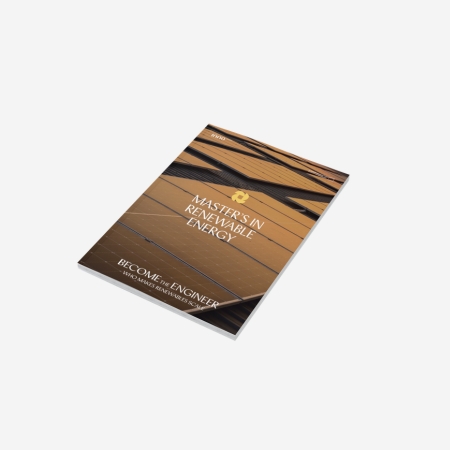
See exactly how the Master’s in Renewable Energy is structured before you choose your study path. Inside are the individual courses and ECTS, mandatory and elective requirements at each Year 1 and Year 2 university, internship and thesis components, and the additional academic activities that sit around your degree.
Built across 4 universities and a business school


See the programme from the inside
Your thesis
Your final semester centres on a 30 ECTS Master’s thesis, equivalent to at least 20 weeks of full-time work, focused on a research or technology challenge in renewable energy.
You are strongly encouraged to carry out your thesis through an internship with an industrial or start-up partner, or at a research centre. Your work is jointly supervised by your university and a researcher or professional from the host organisation and should include a strong practical component focused on engineering innovation.
Your degrees
After successfully completing the two-year programme, you will receive a degree from each university in your study path:
- Master of Energy Engineering and Management (Mestrado em Engenharia e Gestão da Energia) by Instituto Superior Técnico
- Master Energy Environment: Science Technology and Management (STEEM) by École polytechnique
- École Polytechnique
Master Energy Environment: Science Technology and Management (STEEM) - Instituto Superior Técnico
Master of Energy Engineering and Management
(Mestrado em Engenharia e Gestão da Energia)
Additional credentials
- Esade Business School: Certificate of Academic Participation in the Innovation & New Venture Creation Programme
- An EIT Label Certificate (from the European Union)*: additional recognition of the programme’s entrepreneurship, mobility and learning model.
- Optional digital learning: additional certificates are available for students completing eligible optional courses.
*The EIT Label is a quality seal awarded by the European Institute of Innovation and Technology (EIT) to a KIC educational programme that has been assessed positively by the EIT on the implementation of the EIT Quality Assurance and Learning Enhancement (EIT QALE) system and the application of specific quality criteria with focus on the EIT Overarching Learning Outcomes (EIT OLOs), robust entrepreneurship education, highly integrated, innovative ‘learning-by-doing’ curricula, international mobility and outreach.
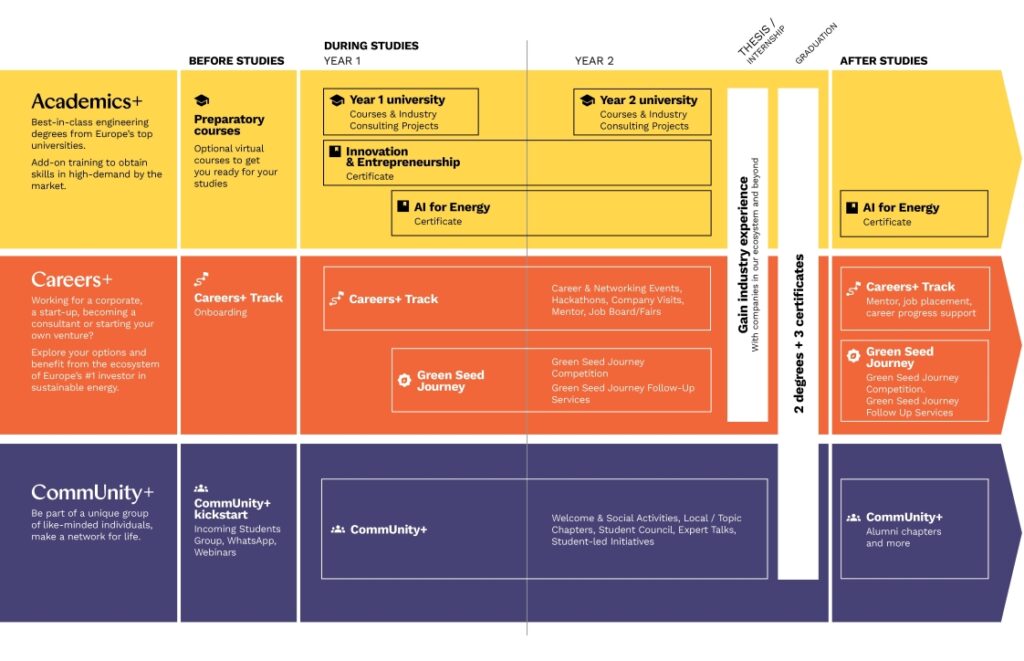
See how your whole Masters+ journey comes together
Alongside your university studies, Masters+ adds entrepreneurship, professional experiences and a community that develops throughout the two-year programme and continues after graduation.
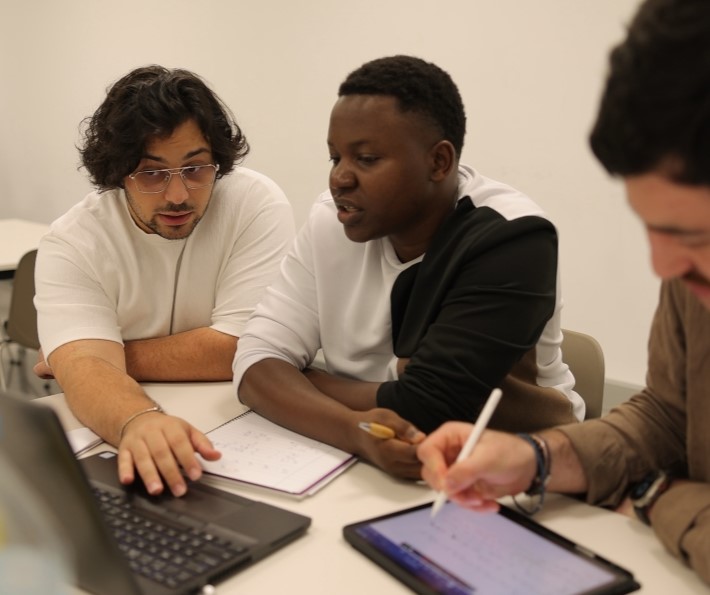
Where the Master’s in Renewable Energy takes you
Example roles:
- Renewable Energy Engineer
- Solar Energy Engineer
- Wind Energy Engineer
- Hydropower Engineer
- Offshore Renewable Energy Engineer
Work on the technologies that turn renewable resources into usable energy, from solar and wind to hydro, marine energy, bioenergy and emerging generation systems.
Example roles:
- Energy Storage Engineer
- Battery Engineer
- Hydrogen Engineer
- Sustainable Fuels Engineer
- Bioenergy Engineer
Develop the technologies and energy vectors that make renewable systems more flexible, from batteries and hydrogen to biofuels and other sustainable fuels.
Example roles:
- Power Systems Engineer
- Grid Integration Engineer
- Smart Grid Engineer
- Power Electronics Engineer
- Energy Systems Engineer
Help integrate variable renewable generation into modern energy systems through grid engineering, power electronics, system modelling, control and infrastructure planning.
Example roles:
- Energy Systems Analyst
- Energy Efficiency Engineer
- Building Energy Engineer
- District Energy Engineer
- Sustainable Energy Consultant
Design and optimise the systems that determine how energy is produced, distributed and used across buildings, cities and industrial environments.
Example roles:
- Energy Market Analyst
- Renewable Energy Project Developer
- Energy Policy Analyst
- Energy Consultant
- Energy Project Manager
Connect technical knowledge with economics, regulation, markets and project delivery to help renewable energy projects move from concept to implementation.
Example roles:
- Energy Data Analyst
- Energy Modelling Engineer
- AI/ML Engineer for Energy
- Sustainability Engineer
- Lifecycle Assessment Engineer
Use modelling, data science, AI and sustainability analysis to understand energy systems, improve performance and support better technology and investment decisions.
Companies hiring Masters+ renewable energy graduates








CommUnity+
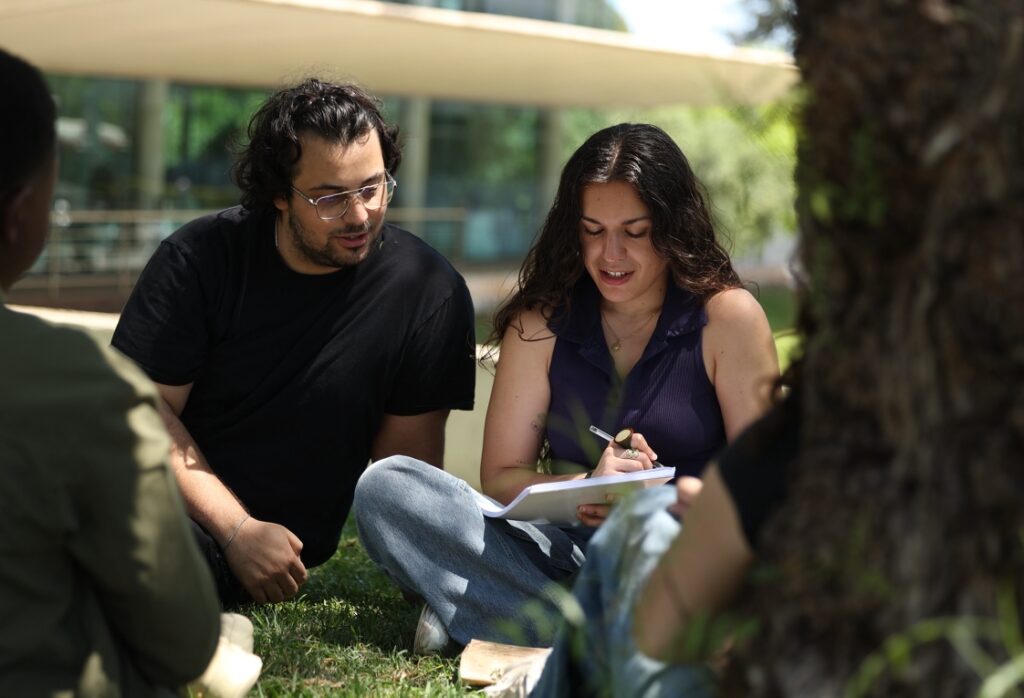
The Master’s in Renewable Energy takes you across universities, countries and technologies, but you remain part of the wider Masters+ community throughout the journey.
You meet students beyond your own study route, connect with alumni and professionals across the energy sector and build relationships that can continue long after graduation.
CommUnity+ is where that wider network comes together.
Talk to a student
Want to know what moving between universities is really like? How students choose their Year 2 destination? What the workload feels like, or how projects, internships and thesis opportunities work in practice?
Admission requirements
To apply for InnoEnergy Masters+, you need:
- A completed Bachelor’s degree worth at least 180 ECTS, or equivalent
- The required level of English language proficiency
- A Bachelor’s degree that meets the programme-specific academic requirements
Still finishing your Bachelor’s?
You can apply while you are in the final year of your undergraduate degree. If your application is successful, you may receive a conditional offer while you complete your studies.
For the Master’s in Renewable Energy, your Bachelor’s degree should be in engineering, including areas such as mechanics, chemistry, electricity, electronics or energy, or in engineering physics.
Your previous studies affect which Year 1 routes are available:
- Applicants from electricity or electronics should have a good foundation in material and thermal sciences, including thermodynamics, heat transfer and fluid dynamics, to start at KTH Royal Institute of Technology.
- Applicants from chemistry, chemical engineering or mechanical engineering should have sufficient foundations in circuit theory, electrical machines and electronics to start at Universitat Politècnica de Catalunya (UPC). Instituto Superior Técnico offers harmonisation courses that can help address relevant gaps.
- Other engineering backgrounds can be considered case by case where the required science and engineering foundations are covered.
- Knowledge of economics and previous experience with engineering projects are considered valuable.
Students who have not yet completed their Bachelor’s degree when applying in Rounds 1 or 2 cannot select KTH Royal Institute of Technology as their Year 1 university. In those rounds, applicants still completing their degree should choose Universitat Politècnica de Catalunya (UPC), École polytechnique or Instituto Superior Técnico, or apply for KTH Royal Institute of Technology in Round 3.
Applicants with civil or naval engineering backgrounds may be considered if they demonstrate sufficient relevant technical foundations, but these backgrounds are not eligible for KTH Royal Institute of Technology in either year of the programme.
For the Master’s in Renewable Energy, an elevator-pitch video of up to two minutes is encouraged but not mandatory. Use the video to explain why you want to join the programme and what you would bring to it.
If you do not submit a video, you do not need to submit a motivation letter. Your motivation will instead be evaluated through the questions in the application form.
The full requirements page explains the application process, required documents and the evidence you need to provide.
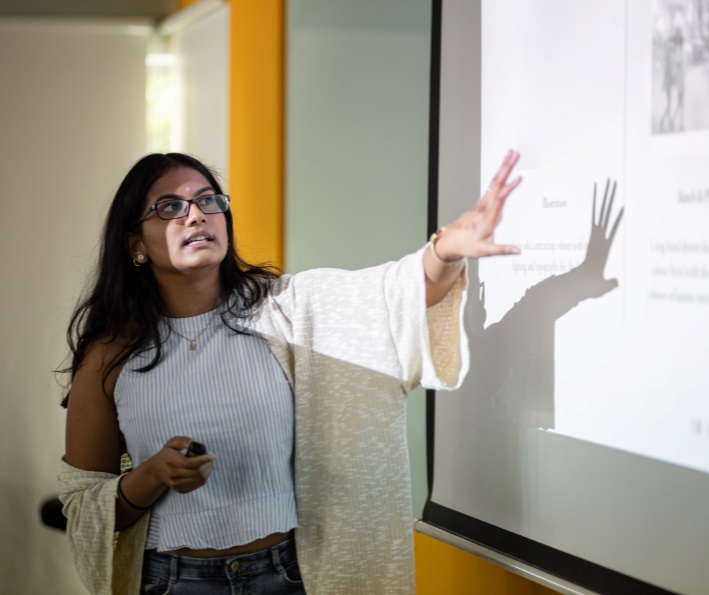
Looking at a different part of the energy system? Explore other Masters+ programmes
Europian Master’s in Nuclear Energy
Become the engineer who makes low-carbon power possible

Master’s in Advanced Energy Systems and AI
Become the engineer who closes the gap between AI and energy
Master’s in Smart Electrical Systems and Networks
Become the engineer who powers electrification

Master’s in Sustainable Energy Systems
Become the engineer who connects clean tech and energy systems