“Hi! Nice to meet you, I’m Gaia. Here at Orchestra Scientific, we capture CO₂ at the source, using a new, low-energy patented technology.”
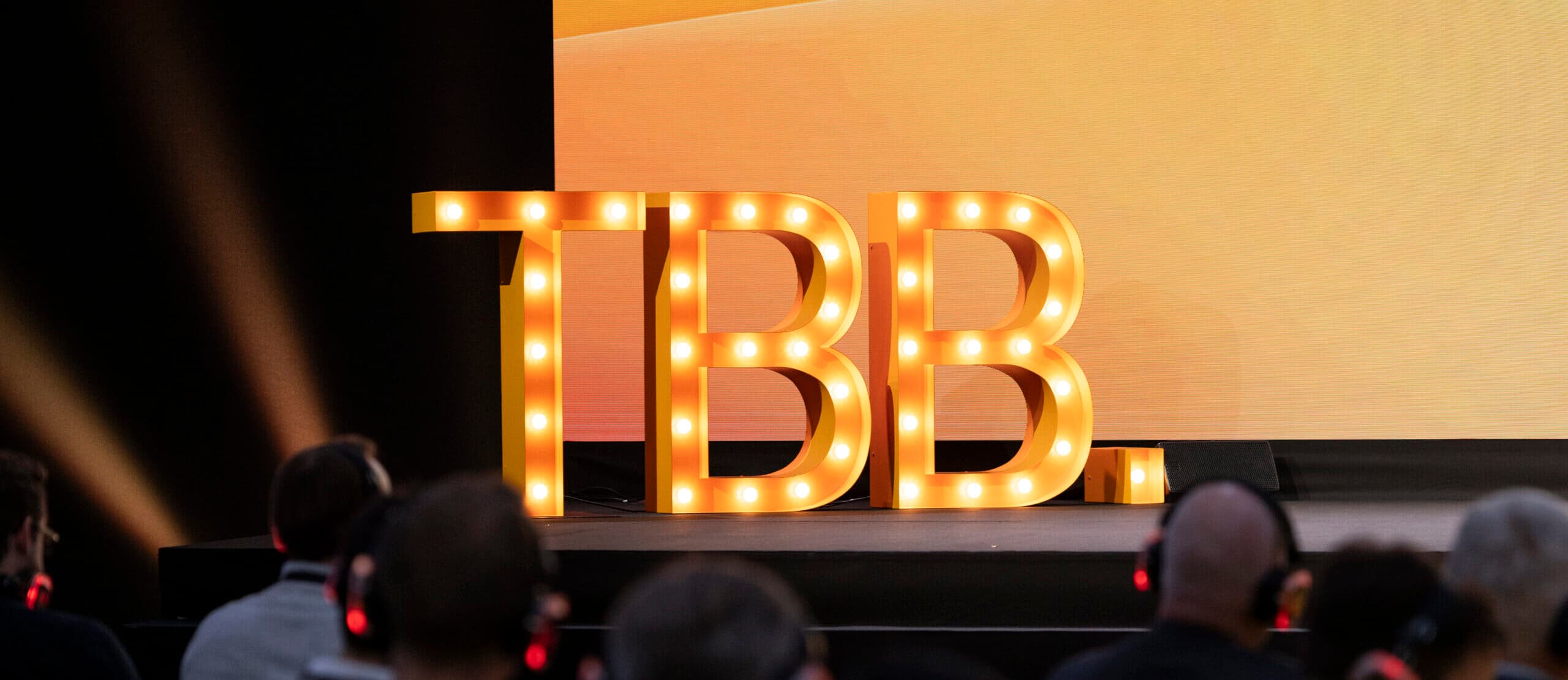
That was the opening line of my pitch at The Business Booster (TBB) 2026.
The Business Booster is InnoEnergy’s flagship innovation event, where selected Masters+ students work directly with startups, innovators and investors. Standing at my assigned booth at Messe München, I had the chance to truly feel part of the company I was representing. What began as an opportunity to attend an international clean-tech event quickly became something more: a way to experience firsthand the ecosystem I hope to contribute to in the future.
I’m Gaia, originally from Italy, and I’m completing the second year of the InnoEnergy Masters+ Master’s in Renewable Energy at KTH Royal Institute of Technology in Stockholm, after spending my first year at Instituto Superior Técnico in Lisbon. Coming from an engineering background, I’ve always been interested in the technological side of the energy transition. My experience with InnoEnergy has gradually broadened that view, introducing me to the economic, entrepreneurial and business dimensions that are just as essential to bringing innovation to life. Many of those opportunities come through Careers+, and TBB was one of them. Flying from Stockholm to Munich, I wasn’t entirely sure what to expect. It turned out to be far more insightful than I had imagined.
A shared ambition for Europe’s energy future
From the moment I arrived, the atmosphere made me feel part of something bigger. Through presentations, conversations, panels and many chance encounters, everyone seemed to be working towards the same mission: advancing technologies and accelerating the move to a more sustainable future.
One of the strongest impressions I took home was the sense of urgency around Europe’s position in the global energy transition. In the panels I attended and the conversations I had, it became clear that Europe is trying to strengthen its competitiveness while building the technologies, industrial capabilities and supply chains it needs to reach its sustainability goals independently.
Technological sovereignty, energy security and the ability to scale European innovation are no longer just strategic ambitions. They are becoming essential priorities, and the need to reduce dependencies and develop our own industrial capabilities came up again and again throughout the event.
Standing among people actively working to make this possible gave me the feeling of being in the right place at the right moment. Surrounded by hundreds of innovators trying to scale solutions that could electrify and decarbonise our future, I could see how the topics we study in class translate into real challenges and opportunities.
It also made me think about the role that we, as renewable energy engineering students, can play. The demand for skilled professionals who understand both the technologies and the systems behind them is growing, and being around people already shaping this future made that prospect feel more tangible than ever.
Innovation happens through collaboration
Beyond the technologies on display, I particularly enjoyed watching how the companies interacted with each other. It wasn’t unusual to see CEOs, CTOs and other representatives step away from their own booths to visit other exhibitors, exchange ideas and talk through the challenges they were facing. These conversations often went beyond presenting a product. They were about finding synergies, exploring partnerships and solving problems together.
I found that inspiring because it showed that innovation doesn’t happen in isolation. Even companies developing different technologies, and addressing completely different parts of the energy system, can find common ground and ways to collaborate.
It also made me reflect on knowledge-sharing at a broader level. If Europe wants to accelerate its energy transition and strengthen its technological independence, collaboration cannot stop at company level. Countries, institutions and industries need to be willing to share knowledge, experiences and resources rather than working in isolation or protecting what they have built. The faster we learn from each other, the faster we grow as a common force.
In an industry where technologies are evolving rapidly and the challenges are often interconnected, creating the right connections can be just as important as developing the technologies themselves.
More than a professional experience
TBB was also a chance to reconnect with students from other universities in the InnoEnergy community.
One thing I appreciate about InnoEnergy Masters+ is how it brings together people from different countries, backgrounds and universities. Even though we study in different places and follow different paths, finding our way back together always feels natural. Ideas, experiences and plans for the future flow easily between us, and it’s clear how much ambition and curiosity we share. That sense of belonging is what CommUnity+ is built around.
These connections are extremely valuable to me. We are all at different stages of our journeys, but we share an interest in contributing to the same sector. And who knows? Maybe one day we will be the ones pitching on the TBB stage, trying to convince investors to back our startups, or representing companies and meeting the next generation of students looking at us with the same curiosity we have today.
TBB wasn’t only about business and technology, of course. One of the highlights was the Bavarian dinner at the end of the first day. With traditional food, plenty of pretzels, a Bavarian band and even a dancing group, the evening brought everyone together in a completely different atmosphere. It was a reminder that behind all the technologies, companies and ambitious targets, the energy transition is driven by people. Bringing those people together is perhaps one of the most valuable things an event like TBB can do.
Taking the experience forward
Being assigned to Orchestra Scientific gave me a perspective I wouldn’t have gained by attending TBB simply as a visitor. I had to step into the company’s shoes, understand its value proposition and explain it to people with different backgrounds, interests and levels of technical knowledge.
Explaining a technical solution so that its potential is immediately clear is a skill I believe will be extremely valuable throughout my career. It also gave me a better understanding of how technological innovation has to connect with market needs, business opportunities and the people who can help bring it to scale. If you want to read how another Masters+ student turned a career event into a real role, Hsiang-Yu Hung shares his journey into battery storage here.
I left Munich with a broader understanding of the clean-tech ecosystem, new connections and, most importantly, renewed motivation. Seeing so many people working towards a common goal made the energy transition feel less like an abstract ambition and more like something we are collectively building, one technology, one collaboration and one conversation at a time.
I’m grateful to the InnoEnergy team for making this experience possible, to Orchestra Scientific for the opportunity to represent their work, and to everyone I met along the way.
As I continue my studies and start thinking about my next steps, TBB has given me a clearer picture of the world I want to be part of. And perhaps, in a few years, I’ll find myself back at TBB, not as a student assistant, but as one of the people presenting the next solution to Europe’s energy challenges.
Interested in the programme behind this experience? Explore the Master’s in Renewable Energy at InnoEnergy Masters+.
Written by Gaia Mameli, an InnoEnergy Masters+ student in Renewable Energy, currently in Year 2 at KTH Royal Institute of Technology, Stockholm.