Become the engineer who closes the gap between AI and energy
Plenty of engineers understand power systems. Plenty of data scientists understand machine learning. The people who understand both, and know where the two actually meet, are rare.
The Master’s in Advanced Energy Systems and AI is built for that intersection. You learn how AI can optimise energy use, support advanced electrification and enable applications such as energy storage, EV charging and demand-side management.
The programme combines energy engineering with applied AI, data science, energy economics and innovation. You graduate ready to work with intelligent, decentralised energy systems and understand both the technical decisions behind them and the business case for deploying them.
This programme is powered by:

Your study plan
Choose one of four partner universities for your advanced energy systems and AI foundation.
-
KU Leuven
- Leuven, Belgium
- Build a foundation across power systems, power electronics, smart distribution, renewable and thermal energy, energy markets and numerical methods. AI is introduced directly into the curriculum, with further opportunities to study areas such as neural networks, optimisation and technology entrepreneurship. The programme structure also uses conditionally elective courses to help you build a balanced understanding across electrical and thermo-mechanical energy systems.
-
UPC · Universitat Politècnica de Catalunya · BarcelonaTech
- Barcelona, Spain
- Build your foundation across electricity networks, renewable energy, sustainable energy systems, energy efficiency and data science. Core learning includes renewable-energy technologies and projects, sustainable energy and environment, and rational and efficient energy use. Electives allow you to deepen your understanding of power systems, grid integration, energy markets and related areas.
-
KTH Royal Institute of Technology
- Stockholm, Sweden
- Combine energy-system engineering with AI applications, renewable-energy technologies, power systems and the built environment. Electives allow you to explore areas such as power-system control, machine learning, energy markets, electrical machines and energy business.
-
Grenoble INP – UGA
- Grenoble, France
- Develop an integrated foundation across smart power systems, energy conversion, data science and digital energy. Courses cover areas including modelling and dispatch of smart power, dynamic-system design and control, energy economics, computer sciences, smart grids, eco-districts, and energy-system sizing.
*Available Year 1 and Year 2 combinations depend on the confirmed mobility structure and consortium rules for your intake.
Move to a second partner university and specialise in one area of advanced energy systems and AI:
-
KU Leuven
- Leuven, Belgium
- Smart Transmission Systems: focus on how artificial intelligence, machine learning, optimisation and data analytics can support increasingly complex transmission systems. You explore large-scale renewable-energy integration, forecasting, energy markets and regulation, including how grid operators, renewable-energy producers, regulators and market actors make decisions across the European power system.
-
UPC · Universitat Politècnica de Catalunya · BarcelonaTech
- Barcelona, Spain
- Artificial Intelligence for Smart Distribution Grids: apply AI and machine learning to the monitoring, operation and planning of modern distribution networks. You work with energy-system and external data to improve forecasting, anomaly detection, grid operation and planning in networks with high shares of renewable generation, storage, electric vehicles and flexible demand.
-
Grenoble INP – UGA
- Grenoble, France
- Digital Intelligence for Future Energy Systems: explore how AI and digital technologies can support flexible and decentralised energy systems. You focus on areas including smart buildings, distributed energy resources, data centres, energy-management systems, ICT and digital twins, while also considering the ethical, social and environmental implications of AI in energy.
-
KTH Royal Institute of Technology
- Stockholm, Sweden
- AI for Energy Systems in Smart Cities: explore AI- and data-driven approaches to complex urban energy systems. You study how electricity, heating and cooling, buildings, transport, infrastructure and distributed energy resources interact, using tools including machine learning, forecasting, optimisation, digital technologies and cybersecurity.
*More detailed information about each Year 2 specialisation will be added soon.
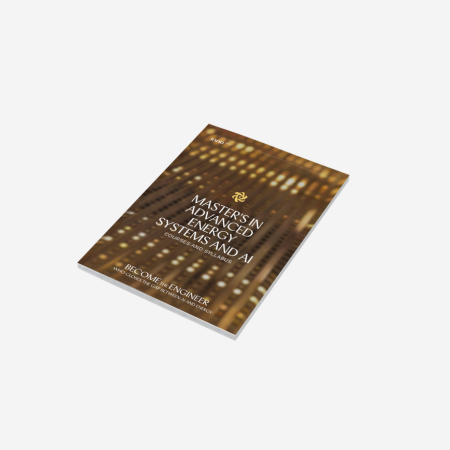
Explore the full curriculum in-depth
See exactly how the Master’s in Advanced Energy Systems and AI is structured before you choose your study path.
Inside, you can explore individual courses and ECTS, mandatory and elective requirements, university-specific study plans, Year 2 specialisations and the additional academic experiences that sit around your degree.
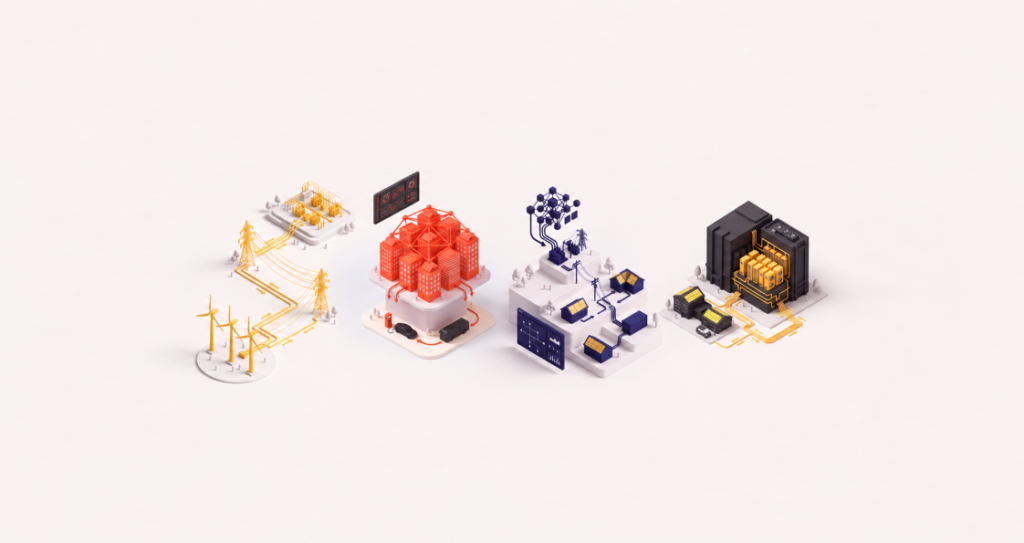
Four paths to becoming an AI energy engineer
From intelligent transmission grids to AI-powered smart cities, your second year is where you choose the direction of your expertise. Each of the four specialisations offers a different way to apply artificial intelligence to real-world energy challenges.
See what sets each pathway apart, including the courses you’ll take, the skills you’ll develop and the universities where you’ll study.
Built across 4 universities and a business school


See the programme from the inside

Your thesis
Your final-year thesis gives you 30 ECTS to investigate a substantial challenge in advanced energy systems and AI.
Depending on your specialisation, you can work on areas such as smart transmission and distribution systems, renewable-energy integration, forecasting and optimisation, AI-based energy management, power electronics, energy storage, smart buildings, digital twins, data centres, energy markets or demand-side flexibility.
Where relevant, your thesis can connect with academic research groups, industry partners, start-ups, public organisations or innovation ecosystems around your host university.
The aim is to bring together technical depth, data-driven analysis and real-world impact, demonstrating your ability to develop solutions for increasingly intelligent energy systems.
Your degrees
After successfully completing the two-year programme, you will receive a degree from each university in your study path:
- EIT-KIC Master in Energy from KU Leuven
- International MSc in Electrical Engineering for Smart Grids & Buildings from Grenoble INP – UGA
- Master of Science from KTH Royal Institute of Technology
- Master of Energy Engineering from Universitat Politècnica de Catalunya (UPC)
Additional credentials
- Esade Business School: Certificate of Business, Innovation and Entrepreneurship
- An EIT Label Certificate (from the European Union)*: additional recognition of the programme’s entrepreneurship, mobility and learning model.
- Optional digital learning: additional certificates are available for students completing eligible optional courses.
*The EIT Label is a quality seal awarded by the European Institute of Innovation and Technology (EIT) to a KIC educational programme that has been assessed positively by the EIT on the implementation of the EIT Quality Assurance and Learning Enhancement (EIT QALE) system and the application of specific quality criteria with focus on the EIT Overarching Learning Outcomes (EIT OLOs), robust entrepreneurship education, highly integrated, innovative ‘learning-by-doing’ curricula, international mobility and outreach.
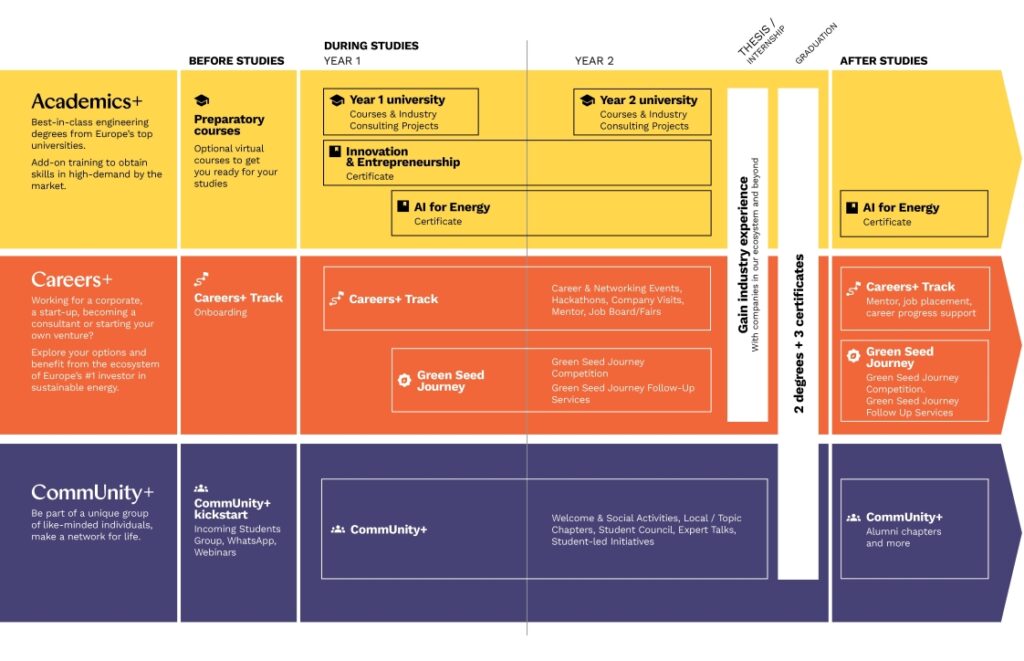
See how your whole Masters+ journey comes together
From your first steps before arrival to graduation and beyond, see how Masters+ develops across two years of academics, entrepreneurship, career development and community, and continues beyond graduation.

Powered by AI4GreenDeal
The Master’s in Advanced Energy Systems and AI is developed through AI4GreenDeal, an EU-funded initiative led by InnoEnergy bringing together universities, research organisations and industry to advance the AI, data and energy skills needed for Europe’s green and digital transition.
The programme combines advanced energy-system knowledge with applied artificial intelligence, data science, innovation and entrepreneurship, connecting academic learning with the challenges shaping the future energy system.

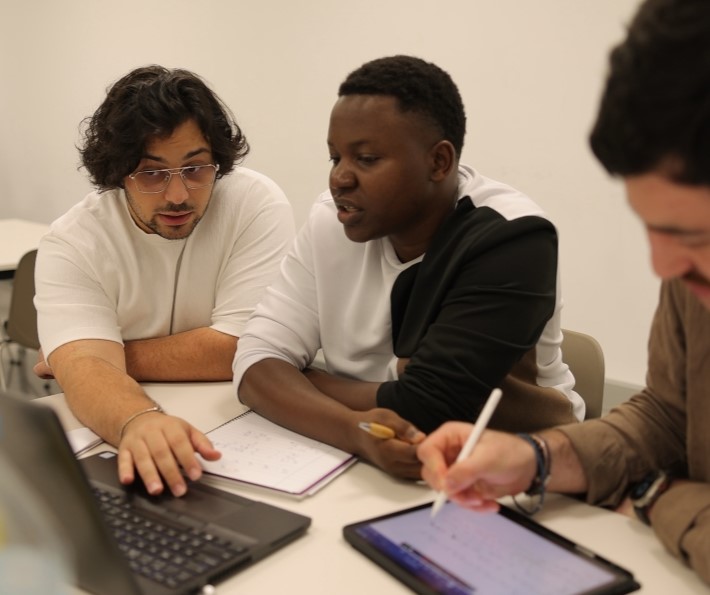
Where the Master’s in Advanced Energy Systems and AI can take you
Example roles:
- Energy Data Scientist
- AI / Machine Learning Engineer for Energy
- Energy Data Analyst
- Digital Energy Engineer
Build and apply AI and data-driven tools to forecasting, optimisation, energy management and complex energy-system decisions.
Example roles:
- Smart Grid Engineer
- Power Systems Engineer
- Grid Analytics Engineer
- Grid Optimisation Engineer
Work on the monitoring, operation, planning and digitalisation of increasingly distributed and renewable-heavy power systems.
Example roles:
- Energy Forecasting Analyst
- Optimisation Engineer
- Energy Market Analyst
- Renewable Integration Analyst
Use data, modelling and AI to understand generation, demand, markets and system constraints.
Example roles:
- Smart Energy Systems Engineer
- Building Energy Analyst
- Demand-Side Flexibility Specialist
- Digital Twin Engineer
Connect buildings, transport, infrastructure and digital systems to improve efficiency, resilience and flexibility.
Example roles:
- Distributed Energy Resources Engineer
- Energy Management Systems Engineer
- Storage and Flexibility Analyst
- Electromobility Energy Engineer
Work with storage, EV charging, flexible loads and distributed generation as energy systems become increasingly decentralised.
Example roles:
- Digital Energy Consultant
- Energy Technology Consultant
- Innovation Engineer
- Technical Project Manager
Bring technical, data and business perspectives together across projects, innovation strategy and deployment.
Connected to the AI4GreenDeal industry ecosystem







CommUnity+
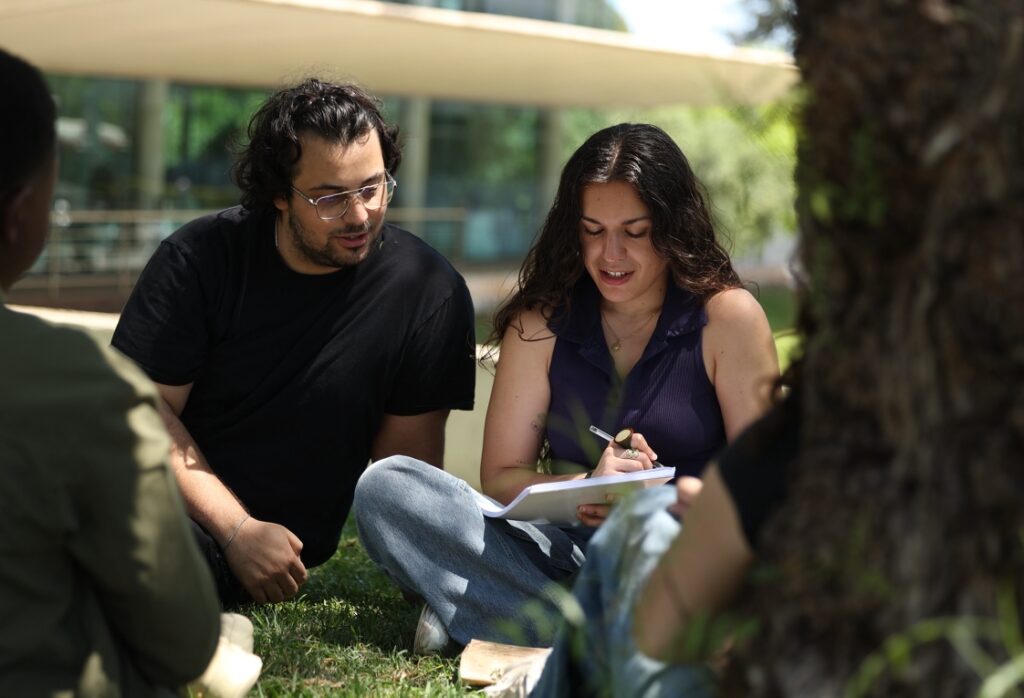
The Master’s in Advanced Energy Systems and AI takes you across universities, countries and specialisations, but you are part of Masters+ throughout the whole experience. You meet students beyond your own university and programme, build connections across the wider energy sector and join a community that continues after graduation.
CommUnity+ is where that wider Masters+ network comes together.
Talk to a student
Want to know what moving between universities is really like, how students choose their Year 2 or what the workload feels like?
Admission requirements
To apply for InnoEnergy Masters+, you need:
- A completed Bachelor’s degree worth at least 180 ECTS, or equivalent
- The required level of English language proficiency
- A Bachelor’s degree that meets the programme-specific academic requirements
Still finishing your Bachelor’s?
You can apply while you are in the final year of your undergraduate degree. If your application is successful, you may receive a conditional offer while you complete your studies.
For the Master’s in Advanced Energy Systems and AI, your Bachelor’s degree should be in in engineering, computer science, data science or another relevant science field.
Your previous studies should provide a strong foundation in at least two of the following three areas:
- Electrical engineering
- Basics of electrical energy systems
- Electrical machines and circuits
- Thermo-mechanical engineering
- Basics of thermodynamics
- Heat transfer
- Computer and data science
- Programming in at least one language such as Python, MATLAB or C/C++
- Working with datasets
- Numerical methods and data analysis
A basic understanding of systems and control is also expected.
Applicants who do not meet every prerequisite may still be considered on a case-by-case basis. Conditional admission may require you to complete bridging or preparatory learning in areas such as introductory machine learning, thermodynamics or heat transfer, or electrical circuits and basic power engineering.
Missing one of the prerequisites?
Depending on your academic background, you may still be considered for conditional admission.
You may be asked to complete bridging or preparatory learning to strengthen your background in areas such as introductory machine learning, thermodynamics or heat transfer, or electrical circuits and basic power engineering.
We also provide suggested harmonisation resources for students who want to refresh or strengthen particular areas before starting the programme.
Applicants to the Master’s in Advanced Energy Systems and AI are encouraged to submit an elevator-pitch video of up to two minutes, but the video is not mandatory for admission. If you do not wish to submit a video, you do not need to submit a motivation letter.
The full requirements page explains the application process, required documents and the evidence you need to provide.
Looking at a different part of the energy system? Explore other Masters+ programmes
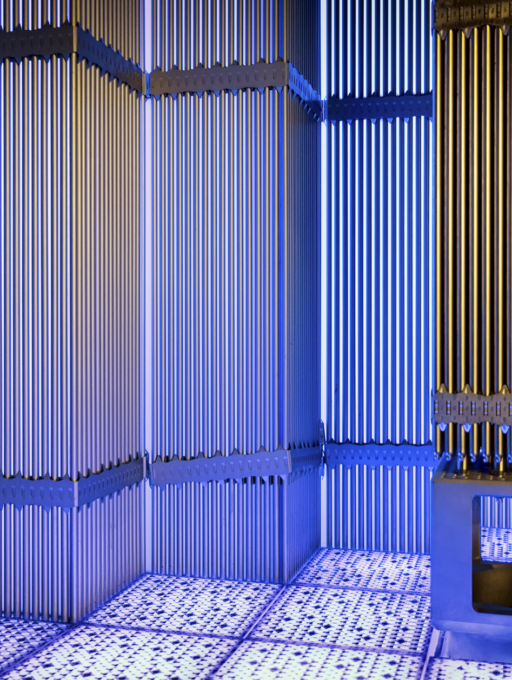
European Master’s in Nuclear Energy
Become the engineer who makes low-carbon power possible
Master’s in Renewable Energy
Become the engineer who makes renewables scale
Master’s in Smart Electrical Networks and Systems
Become the engineer who powers electrification
Master’s in Sustainable Energy Systems
Become the engineer who connects clean tech and energy systems