
Become the engineer who powers electrification
Electricity systems are changing as more renewable generation, storage, electric transport and power electronics connect to the grid. Managing that change requires engineers who understand how power is generated, converted, transmitted, distributed and controlled across increasingly complex networks.
The Master’s in Smart Electrical Networks and Systems prepares you to work across that landscape. You begin with a broad foundation in electric energy systems, covering power systems, smart grids, power electronics, electrical machines and related technologies. In Year 2, you choose where to go deeper through one of five study pathways.
This programme is powered by:

Your study plan
Choose one of two universities for your electric energy systems foundation:
-
KTH Royal Institute of Technology
- Stockholm, Sweden
- Study areas include power system analysis, smart electrical networks, power electronics, electrical machines and drives, communications and control, grid technology and high-voltage engineering. Year 1 also includes a mandatory 12 ECTS Industrial Innovation Project, completed in a student team in collaboration with a company or similar organisation, as well as a mandatory course in innovation and entrepreneurship in electric power engineering.
-
UPC · Universitat Politècnica de Catalunya · BarcelonaTech
- Barcelona, Spain
- Study areas include electric energy conversion, power systems and renewable integration, with options in power electronics, electrical mobility, data science, automation, storage, wind power, power quality and smart grids.
-
European modules
-
Alongside your Year 1 studies at KTH Royal Institute of Technology or Universitat Politècnica de Catalunya (UPC), you take part in European Modules that broaden your view of electric power engineering through expertise from universities across the programme network.
- Introduction to Smart Grids and Data-Driven Applications
KTH Royal Institute of Technology, Sweden - Smart Buildings, Offshore Green Power and Power Electronics
Grenoble INP – UGA, France & UPC · Universitat Politècnica de Catalunya · BarcelonaTech, Spain - Power Quality and Energy Efficiency
AGH University of Krakow, Poland - HVDC Supergrids
KTH Royal Institute of Technology, Sweden - Data Science and ICT as Enablers for Smart Grids
KTH Royal Institute of Technology, Sweden - Applications of Battery Storage
Uppsala University, Sweden
- Introduction to Smart Grids and Data-Driven Applications
-
Choose one of five universities and specialise in the area of electrical energy systems you want to take further:
-
Grenoble INP – UGA
- Grenoble, France
- Models and Methods for Grid Integration of Power Electronics, Storage and Smart Buildings Technologies: explore smart grids, distributed generation, energy markets, machine learning, grid modelling, microgrids, smart buildings, storage and power electronics.
-
KU Leuven
- Leuven, Belgium
- Power Distribution and Storage: build your route across electrical energy, thermomechanical energy and the techno-economic side of energy systems, with options including flexible power systems, electromobility, automation, electricity markets, energy law and optimisation, and a 6 ECTS industrial traineeship within the thesis.
-
UPC · Universitat Politècnica de Catalunya · BarcelonaTech
- Barcelona, Spain
- Power Electronics as Enabling Technology for Renewable Integration: explore power electronics and electrical machines, data science, control and automation, energy storage, wind power, power-system optimisation, power quality and smart grids.
- Available in combination with Year 1 at KTH Royal Institute of Technology.
-
TU/e: Eindhoven University of Technology
- Eindhoven, the Netherlands
- Sustainable Electrical Energy Systems: specialise through areas including power quality, power converters, grid planning and operation, high-voltage technology, electricity markets, smart grids, system stability, machine learning and advanced power electronics, including a 45 ECTS graduation project that includes an internship.
- Currently available in combination with Year 1 at KTH Royal Institute of Technology. Additional language requirements apply for this route.
-
KTH Royal Institute of Technology
- Stockholm, Sweden
- Smart Power Grid Technology: go deeper into areas such as FACTS and HVDC, wind power, power-system protection, electromagnetic compatibility, nonlinear control and project management.
- Available in combination with Year 1 at Universitat Politècnica de Catalunya (UPC).
Explore the full curriculum in-depth
See exactly how the Master’s in Smart Electrical Networks and Systems is structured before you choose your study path. Inside are the individual courses and ECTS, mandatory and elective requirements, the Year 2 specialisations, and the research and graduation projects that form part of different routes. The full Courses & Syllabus also takes you through the European Modules, Industrial Innovation Project, and the qualifications available through the programme.
Built across 5 universities and a business school






See the programme from the inside
Your thesis
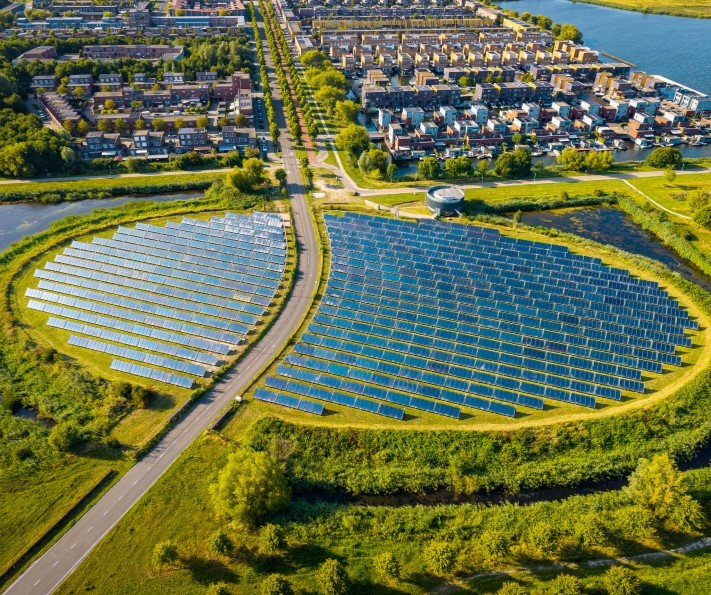
Your second year culminates in a substantial Master’s thesis, degree project or graduation project focused on an electric-power engineering question.
The exact structure depends on your Year 2 university and can include research, industry collaboration or a larger graduation project alongside specialised coursework.
Previous Master’s in Smart Electrical Networks and Systems students have completed thesis work with organisations including ABB, Alliander, Enexis Groep, Fortum, Hitachi Energy, Scania, Schneider Electric, TenneT, Tesla and Vattenfall.
Your degrees
After successfully completing the two-year programme, you will receive a degree from each university in your study path:
- Master of Science (Teknologie Masterexamen) from KTH Royal Institute of Technology
- Master’s degree in Electric Power Systems and Drives from (UPC) Universitat Politècnica de Catalunya
- International Master of Science in Electrical Engineering for Smart Grids and Buildings from Grenoble INP – UGA
- Master of Science (Burgerlijk Ingenieur) from KU Leuven
- Master of Science in Electrical Engineering from TU/e Eindhoven University of Technology
Additional credentials
- Esade Business School: Certificate of Academic Participation in the Innovation & New Venture Creation Programme
- An EIT Label Certificate (from the European Union)*: additional recognition of the programme’s entrepreneurship, mobility and learning model.
- Optional digital learning: additional certificates are available for students completing eligible optional courses.
*The EIT Label is a quality seal awarded by the European Institute of Innovation and Technology (EIT) to a KIC educational programme that has been assessed positively by the EIT on the implementation of the EIT Quality Assurance and Learning Enhancement (EIT QALE) system and the application of specific quality criteria with focus on the EIT Overarching Learning Outcomes (EIT OLOs), robust entrepreneurship education, highly integrated, innovative ‘learning-by-doing’ curricula, international mobility and outreach.
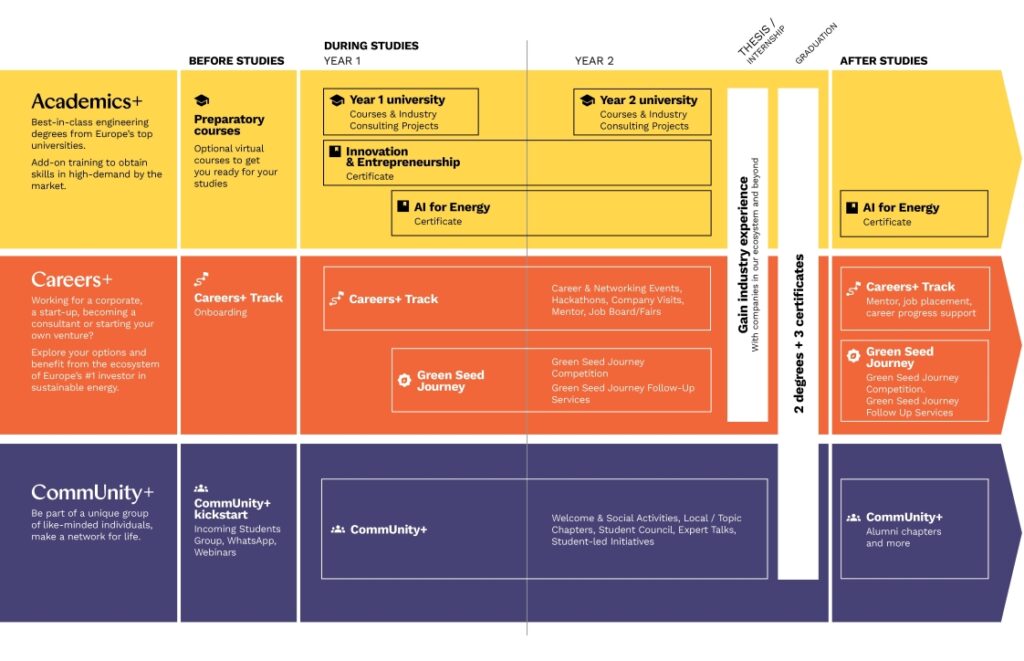
See how your whole Masters+ journey comes together
From your first steps before arrival to graduation and beyond, see how Masters+ develops across two years of academics, entrepreneurship, career development and community, and continues beyond graduation.

Where the Master’s in Smart Electrical Networks and Systems takes you
Example roles:
- Power Systems Engineer
- Grid Planning Engineer
- Transmission Planning Engineer
- Distribution Systems Engineer
Work on how electricity networks are designed, expanded and operated as demand, generation and infrastructure change.
Example roles:
- Smart Grid Engineer
- Grid Automation Engineer
- Digital Grid Engineer
- Power Systems Data Analyst
Use control, communications and data to make electricity networks more observable, flexible and responsive.
Example roles:
- Power Electronics Engineer
- Converter Engineer
- Electrical Drives Engineer
- Electrification Engineer
Work with technologies that convert and control electrical power across grids, renewable generation, industry and electric mobility.
Example roles:
- Grid Integration Engineer
- Energy Storage Engineer
- Renewable Energy Systems Engineer
- Flexibility Engineer
Work on integrating renewable generation, batteries and other flexible resources while maintaining power-system stability and performance.
Example roles:
- Grid Operations Engineer
- Electricity Market Analyst
- Energy Systems Analyst
- Power Market Consultant
Work where physical power systems, operational decisions, flexibility and electricity markets meet.
Example roles:
- Electrical Energy Consultant
- Research Engineer
- Technical Project Manager
- Energy Systems Consultant
Apply electrical-energy expertise across technology development, research, consulting and multidisciplinary projects.
Companies hiring Masters+ energy networks and systems graduates









CommUnity+
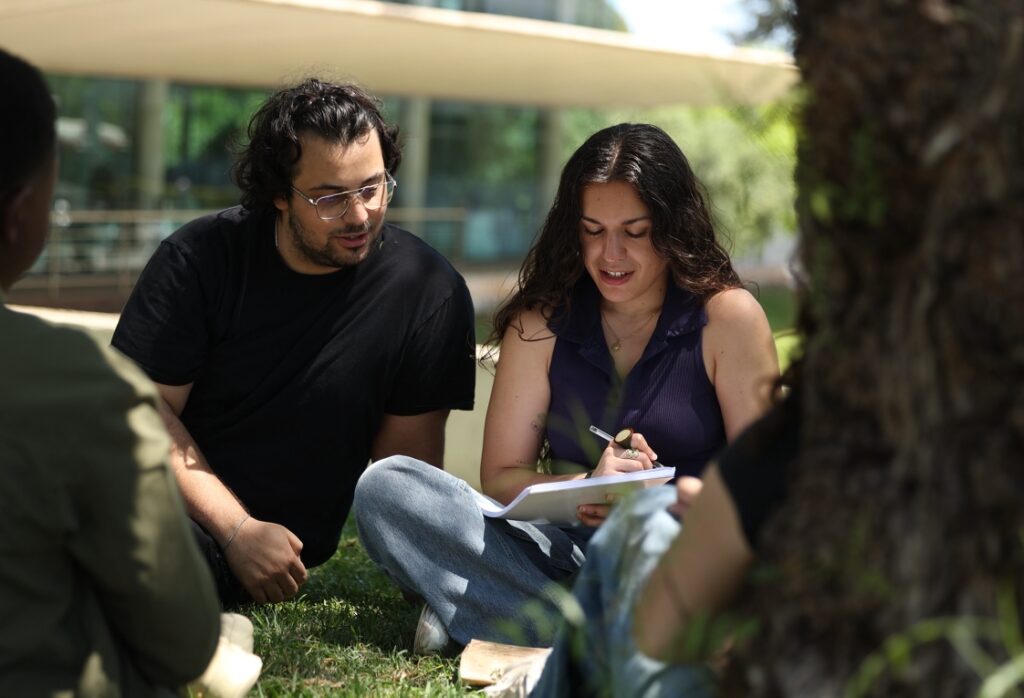
The Master’s in Smart Electrical Networks and Systems takes you across universities, countries and specialisations, but you are part of Masters+ throughout the whole experience. You meet students beyond your own university and programme, build connections across the wider energy sector and join a community that continues after graduation.
CommUnity+ is where that wider Masters+ network comes together.
Talk to a student
Want to know what moving between universities is really like, how students choose their Year 2 electrical networks and systems pathway or what the workload feels like?
Admission requirements
To apply for InnoEnergy Masters+, you need:
- A completed Bachelor’s degree worth at least 180 ECTS, or equivalent
- The required level of English language proficiency
- A Bachelor’s degree that meets the programme-specific academic requirements
Still finishing your Bachelor’s?
You can apply while you are in the final year of your undergraduate degree. If your application is successful, you may receive a conditional offer while you complete your studies.
*If you plan to study at TU/e Eindhoven University of Technology in Year 2, higher English-language requirements apply. Check the English proficiency requirements before choosing your study path.
For the Master’s in Smart Electrical Networks and Systems, your Bachelor’s degree should be in electrical engineering, electronics, power engineering, physical engineering or another closely related field, such as:
- Mechanical Engineering
- Electronic Engineering
- Energy-related Engineering
You need a minimum average grade of 75%. Your previous studies must also include at least:
- 60 ECTS in Electrical Engineering and
- 30 ECTS in Mathematics, covering:
- Calculus
- Numerical methods
- Algebra
- Probability theory
- Basic control theory
Master’s in Smart Electrical Networks and Systems applicants must also submit a separate motivation letter explaining their reasons for applying to the programme.
The full requirements page explains the application process, required documents and the evidence you need to provide.
Looking at a different part of the energy system? Explore other Masters+ programmes
European Master’s in Nuclear Energy
Become the engineer who makes low-carbon power possible
Master’s in Advanced Energy Systems and AI
Become the engineer who closes the gap between AI and energy
Master’s in Renewable Energy
Become the engineer who makes renewables scale
Master’s in Sustainable Energy Systems
Become the engineer who connects clean tech and energy systems